Search results for tag #irc
![[?]](https://s3.teckids.org/toot/accounts/avatars/110/887/901/529/154/814/original/b766f56997e5f038.png)
#IRC is probably the most absurd chat protocol, by modern standards.
It's actually centralised; you can't really run your own server, but every single user practically has to run their own infrastructure to use it meaningfully.
![[?]](https://pouet.chapril.org/system/accounts/avatars/109/275/299/310/415/326/original/b32396b283e9c9c4.png)
![[?]](https://files.techhub.social/accounts/avatars/113/578/551/269/137/008/original/e053c93a3afbd18d.png)
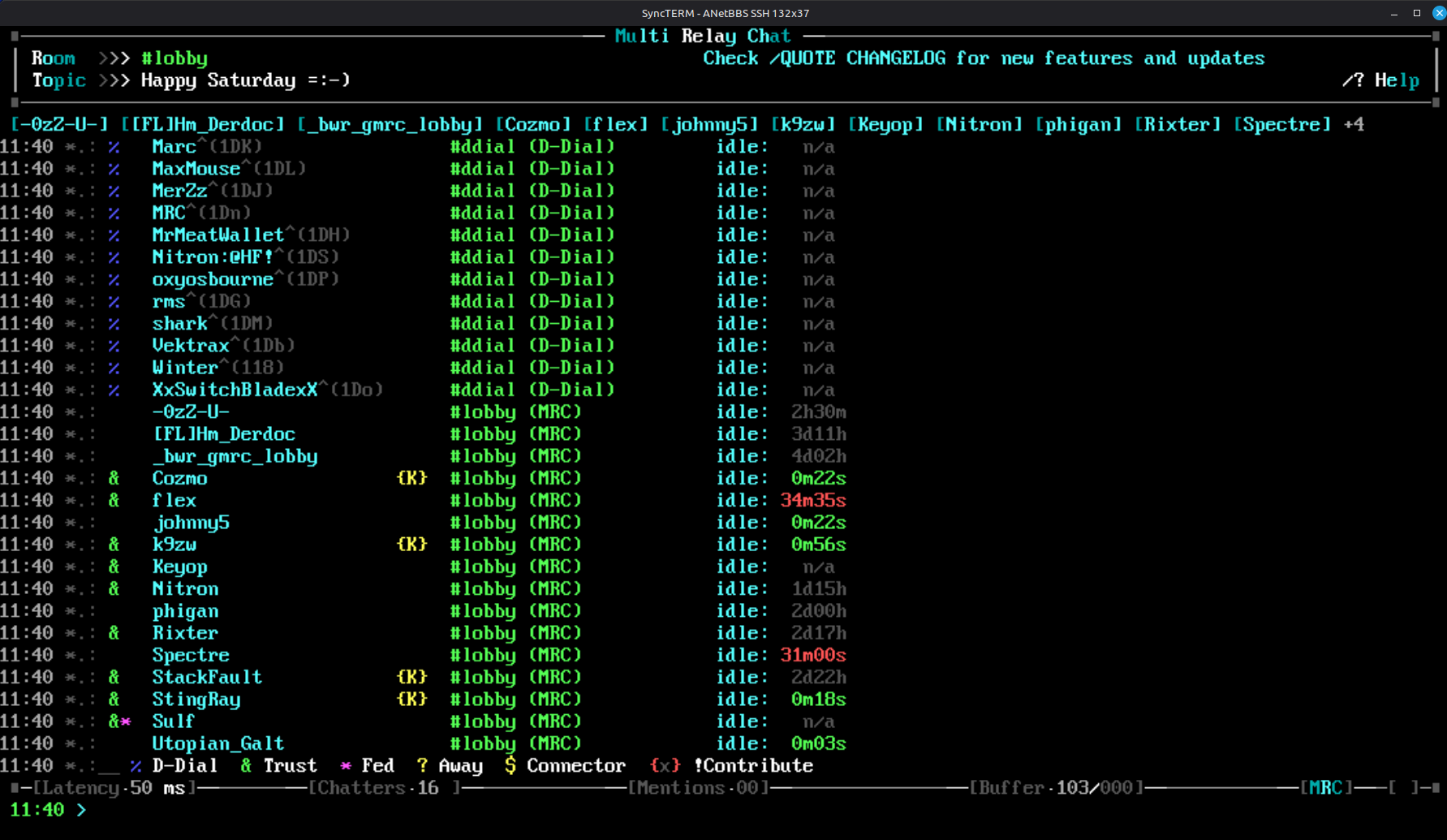
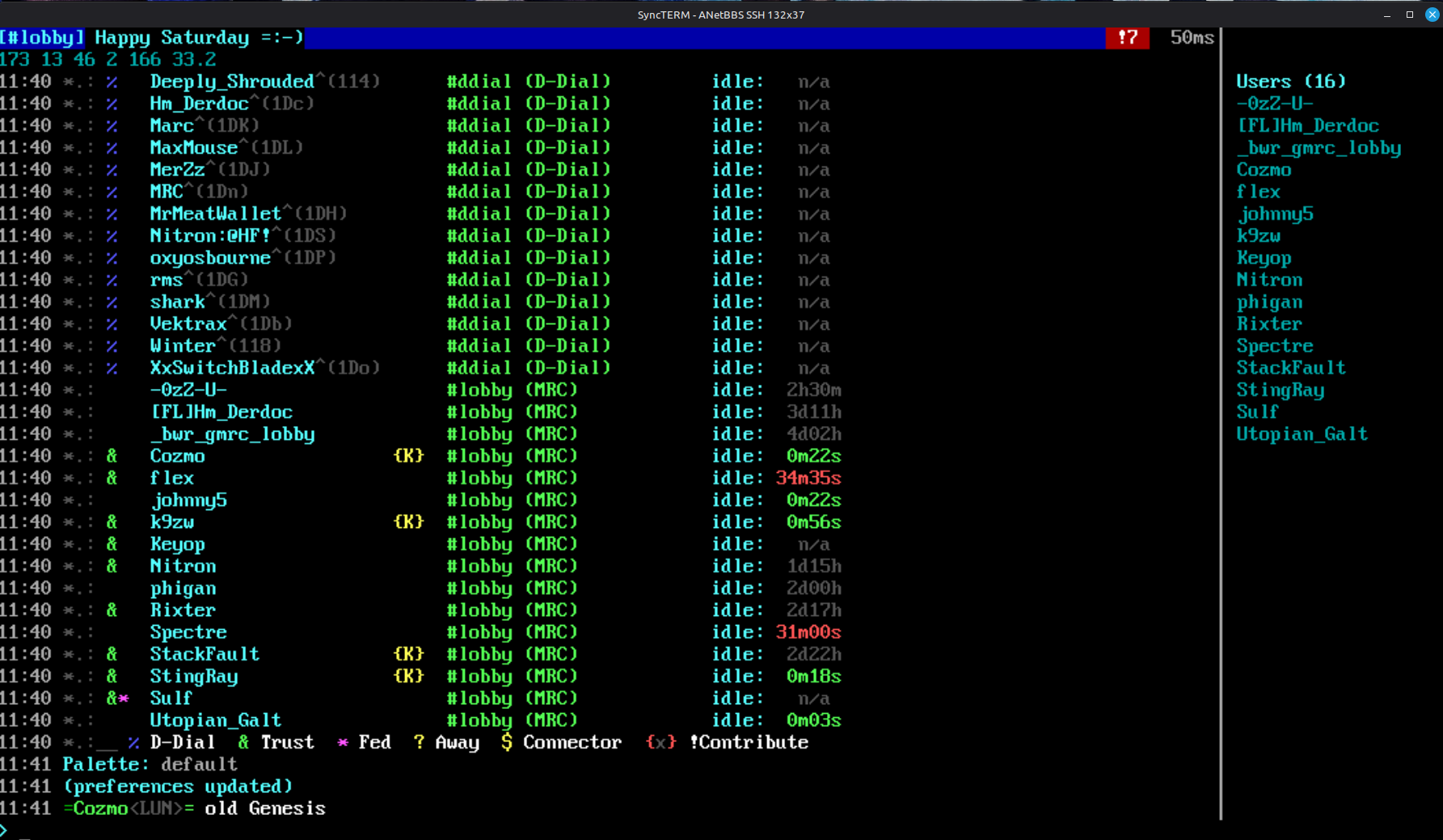
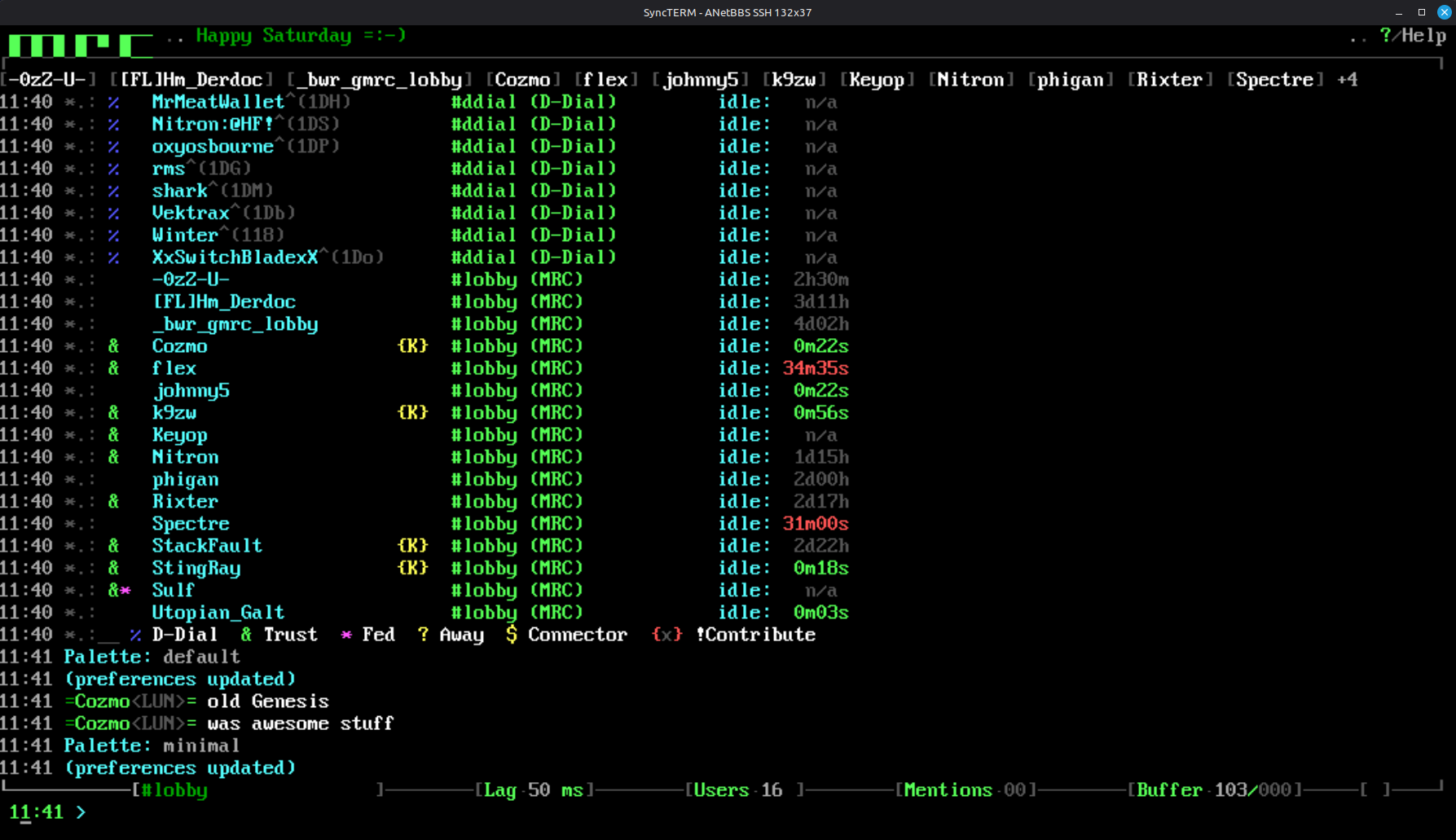
![[?]](https://s3.eu-central-003.backblazeb2.com/social-lol-media/accounts/avatars/111/887/223/729/319/238/original/b4e4bf986ca15639.jpeg)
Was finally able to sit and figure out how to get my chosen #emacs #irc client(s) to successfully connect to a hosted soju bouncer (chat.sr.ht).
I think it's was as simple as using ":name" in addition to ":sasl-username". That or my memory is having issues.
Either of which is entirely possible. 🤣
I think I'm having fun again.
![[?]](https://deadparrotbbs.com/wp-content/uploads/2026/08/cropped-logo05.png)
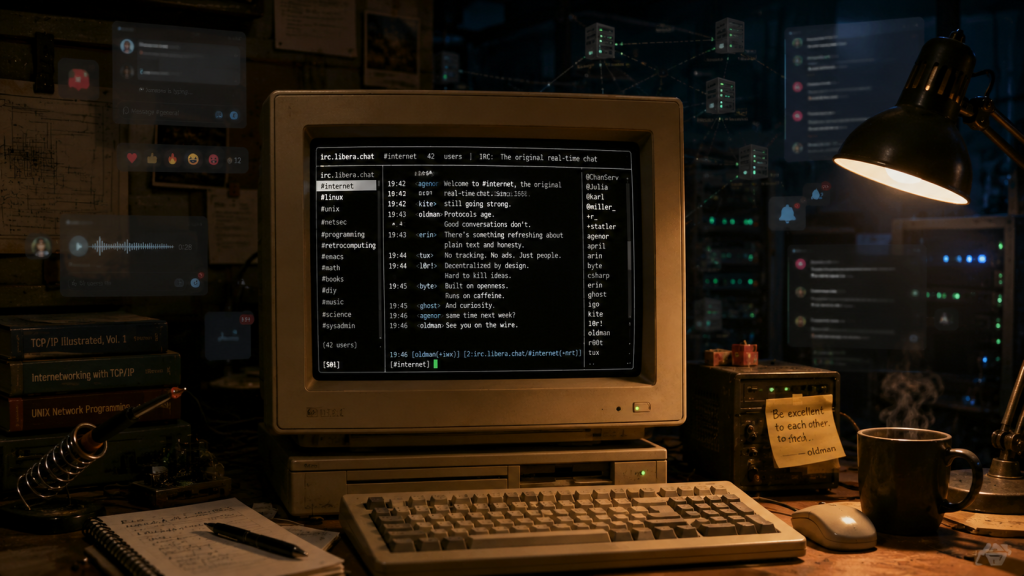
The Strange Persistence of IRC
IRC keeps surviving because it does one old Internet job plainly, without pretending to be a platform. [SENSITIVE CONTENT]
IRC is one of those Internet technologies that always seems to be on the edge of being declared dead. It has looked old for most of its life. It does not have reactions, algorithmic feeds, typing bubbles, voice rooms, sticker stores, or a product team trying to turn conversation into an engagement funnel. By the standards of modern chat systems, it is almost embarrassingly plain, and yet it is still here.
That persistence is not hard to understand if you have spent time with it. IRC does a narrow job and mostly stays out of the way. It gives people named channels, live text conversation, private messages, bots, logs if someone keeps them, and enough conventions to let strangers share a room without needing a corporate account. It is not warm or polished. It is direct.
There is a lot that IRC does badly. Channel discovery can be poor. Identity can be confusing. New users may not understand nicknames, networks, channel operators, services, bouncers, or the strange little customs that built up over decades. If you disconnect, you may miss what happened unless you use a bouncer or logs. Abuse handling depends heavily on the network and channel culture. None of this should be waved away as charm. Some of it is just friction.
Still, there is a reason technical communities kept using it for so long. IRC is simple enough to understand. A client connects to a server. Servers may link together into a network. People join channels. Messages move. Bots can automate routine work because the protocol is open enough and old enough that people have built tools around it for decades. You can use a graphical client, a terminal client, a web gateway, or a script. The conversation is not trapped inside one vendor’s application.
That last part matters. Most modern chat services are products before they are places. They want accounts, telemetry, notifications, mobile apps, retention, integrations, paid tiers, enterprise controls, and whatever new feature keeps the sales deck moving. Some of those things are useful. I use modern tools too. But the center of gravity changes when the conversation lives inside a company’s business model.
IRC comes from an older Internet habit: protocols first, clients second. You could pick the software you liked. You could leave one client and try another without asking the network for permission. If a community did not like one network, it could move, although moving any community is never painless. The important point is that the protocol did not demand one official interface, one account system, and one company’s blessing.
That openness also explains why IRC feels rough compared with newer systems. A protocol that allows many clients will not look identical everywhere. A network made of long-running communities will accumulate local habits. A channel that has existed for years may feel opaque to a newcomer. The same qualities that make IRC independent can also make it less friendly at the front door.
There is also the matter of pace. IRC is live, but it is not built around attention capture in the modern sense. There is no central feed trying to pull you back. No ranking system decides which message matters. A quiet channel can stay quiet without looking like a failed product metric. A busy channel scrolls past, and if you missed it, you missed it. That can be frustrating, but it is also a reminder that conversation does not always need to be packaged for later consumption.
The best IRC channels have always felt more like workshops, club rooms, or back rooms than public stages. People idle. Someone asks a question. A bot reports a build. A maintainer answers after lunch. A regular makes a dry remark. Nothing about this is optimized for spectacle. That is part of why it can still work.
There are better tools for many jobs now. Matrix, XMPP, Discord, Slack, forums, mailing lists, and issue trackers all solve different problems with different tradeoffs. IRC is not the answer to every community need, and pretending otherwise does it no favors. It is weak for rich media, weak for long-form discussion, and awkward for communities that need easy onboarding across phones and desktops.
But IRC keeps its place because it remains good at a particular kind of conversation: live, text-first, low ceremony, loosely organized, and technically legible. It is the chat equivalent of a plain text file. That does not make it superior to every newer system. It does mean it has fewer moving parts between the people talking and the words they type.
There is a lesson there for the web more broadly. Not everything needs to become a platform. Not every social space needs a growth department. Some tools survive because they are small enough to be understood and old enough to have outlived the fashion cycle around them.
IRC persists because it never promised to be the future of communication. It was a way for people to talk on the Internet. For a surprising number of communities, that is still enough.
Alt...
The Strange Persistence of IRC
![[?]](https://media.bsd.cafe/bsdmmedia01/accounts/avatars/110/896/104/742/825/185/original/3ea0586dd0f0f5b9.png)
Does web.libera.chat no longer work?
https://web.libera.chat/gamja/#/
I've been ignoring it for, erm, days or weeks hoping it would begin working again. Today I cleared cookies and can't get back in.
![[?]](https://files.mastodon.social/accounts/avatars/000/156/881/original/3623270cf786e4ab.png)
![[?]](https://cdn.mastodon.cl/accounts/avatars/113/695/098/643/746/923/original/3d0cfa6c2890e1c4.jpg)
📰 IRC Inmobiliaria: Innovación, Respaldo y Confianza en el desarrollo de proyectos para diversas áreas de la industria inmobiliaria
🔗 https://www.df.cl/irc-inmobiliaria-innovacion-respaldo-y-confianza-en-el-desarrollo-de
![[?]](https://media.chitter.xyz/accounts/avatars/000/057/371/original/b517c809a9fd0fbb.png)
I should probably show off my #IRC server since I don't think I have here, or at least not in a long time. It's small right now, but it's there if people want it?
It's running https://ergo.chat/ so there is a built-in option to be present all the time and see chat you missed while you were offline, along with IRCv3 features like typing notifications.
You can visit at https://novasquirrel.com/kiwi/ (which has been set up to use Unicornify for random avatars) or novasquirrel.com port 6697 with TLS.
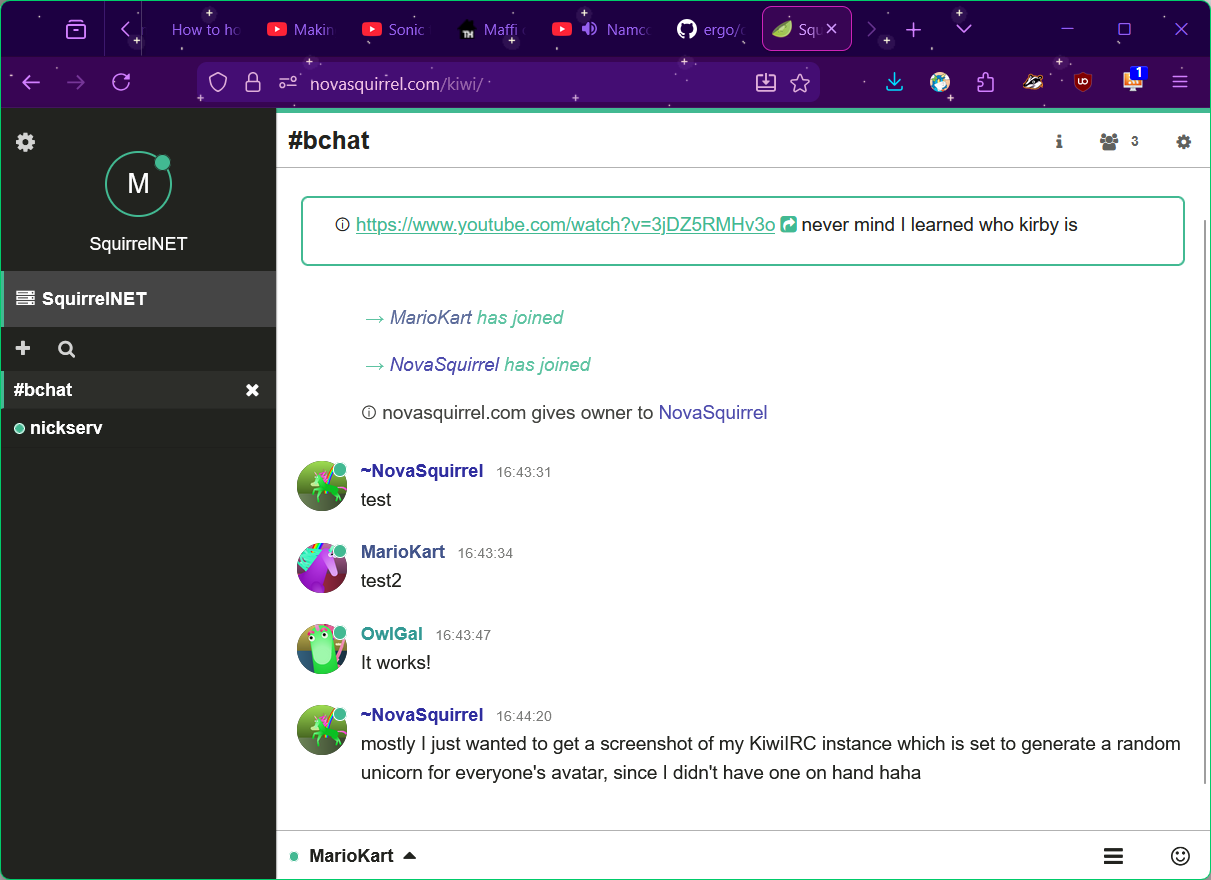
Alt...
KiwiIRC screenshot, showing the chat messages "test", "test2", "It works!" and "mostly I just wanted to get a screenshot of my KiwiIRC instance which is set to generate a random unicorn for everyone's avatar, since I didn't have one on hand haha" - there are colorful unicorns next to each message
![[?]](https://cdn.masto.host/mastodonuno/accounts/avatars/114/654/878/489/960/450/original/541376d5adf76896.png)
IRC continua a essere utilizzato da comunità, progetti open source e appassionati di tecnologia, ma non è necessario rinunciare a un'interfaccia moderna. Srain porta il protocollo IRC in un client GTK progettato per unire semplicità d'uso e strumenti avanzati. #Linux #Srain #IRC #OpenSource #GTK #LinuxSoftware https://www.linuxeasy.org/srain-il-client-irc-moderno-per-gnome/
![[?]](https://media.hachyderm.io/accounts/avatars/109/244/323/765/194/485/original/0ab57d5d033a4ba3.jpeg)

![[?]](https://files.mastodon.social/accounts/avatars/117/101/592/952/651/661/original/b348a41c2a350635.png)
![[?]](https://media.tech.lgbt/accounts/avatars/116/655/881/384/112/498/original/0d17e01327d94ec5.png)
@rozenglass @KinkyKobolds @nomi
Gilfoyle Voice "Kinda like that one?"
Points at #IRC
Again, we had "digital public squares" before #AntisocialMedia!
- And #discord is anything but because they actively enshittify and act as an information blackhole worse than any shutdown Fediverse instance which you could at least #archive…
![[?]](https://media.infosec.exchange/infosec.exchange/accounts/avatars/116/959/427/512/793/295/original/ae0ca3f32a9b35fb.png)
Another old friend has joined and we're now five people in our old IRC channel.
Still a long way from the ~50 people we were when the channel was in it's prime around the year 2000.
The channel was started in 1996/1997 by a friend and I.
The three bots we currently have seems a bit overkill though hehe.
![[?]](https://social.woodpeckersnest.space/fileserver/01GBF68FH1PD9Z4ZPQZA2KKK67/attachment/original/01JZYVBJH4DKBHF7D3MDRTBG52.jpeg)
@nomi @KinkyKobolds personally, I consider #discord to be by far the worst solution to an already solved problem, and I had the misfortune of having to deal with it and
- #MicrosoftTeams [nee. #SkypeForBusiness / #MicrosoftLync / #OfficeCommunicator (Remember #Skype?)]
- #Slack
- #RocketChat
- #Zulip
- #XMPP
- #IRC
- #WebEx
- #Mattermost
- …
I'd rather DIY a "chat" client in #bash based off curl & enc and use ntfy as Server than ever touching discord again.
![[?]](https://files.techhub.social/accounts/avatars/109/321/013/049/346/545/original/af41f0d87f0ae91d.jpg)
I just found out that bash.org lives on at https://bash-org-archive.com/! This page is full of #IRC gold, quotes from days of old. I love the old internet!
![[?]](https://files.mastodon.social/accounts/avatars/110/707/319/383/411/736/original/05c04ccdcc421176.png)

#CoffeeBSD now has an OFTC IRC channel and it's bridged to Matrix! Working on bridging to others shortly.
Please come join on IRC at #coffeebsd @ irc.oftc.net, or on Matrix at #_oftc_#coffeebsd:matrix.org!
You can also find us on Codeberg at https://codeberg.org/NerdNextDoor/CoffeeBSD
On se prépare pour le #VendrediLecture ?
C'est à partir de maintenant sur https://lecture.zeolia.chat
#IRC #Tchat
@KinkyKobolds mostly because "Tech-Illiterates" are lazy af…
- IRC & XMPP exist for decades and are supported on everything that can do TCP/IP and 80×25 MDA output.
- Mumble does Voicechats way better.
- Jitsi Meet does Videochats even better.
- Even with all the enshittification, Zulip & RocketChat are way better options.
Even a Mailinglist is better than Discord, because the latter one is an information blackhole that actively prevents archiving and searching.
- I'd rather self-host all of the above than ever touching discord!
- There's a spechal place in hell for people who abuse discord as replacement for ticketing systems (instead of i.e. Zammad), git, MkDocs & ntfy.sh…
- It's even worse than Microsoft Teams & Skype!!!
Lazyness is NEVER an argument against proper tech!
- And #discord isn't even #accessible.
#IRC #XMPP #Mumble #JitsiMeet #VoiceChat #Chat #VideoChat #MailingList #InformationBalckhole #archival #search #Zulip #RocketChat #Zammad #git #MkDocs #ntfy #MicroaoftTeams #Skype #lazyness
![[?]](https://social-cdn.vivaldi.net/system/accounts/avatars/116/924/752/000/444/500/original/231092fbaec6a157.jpeg)